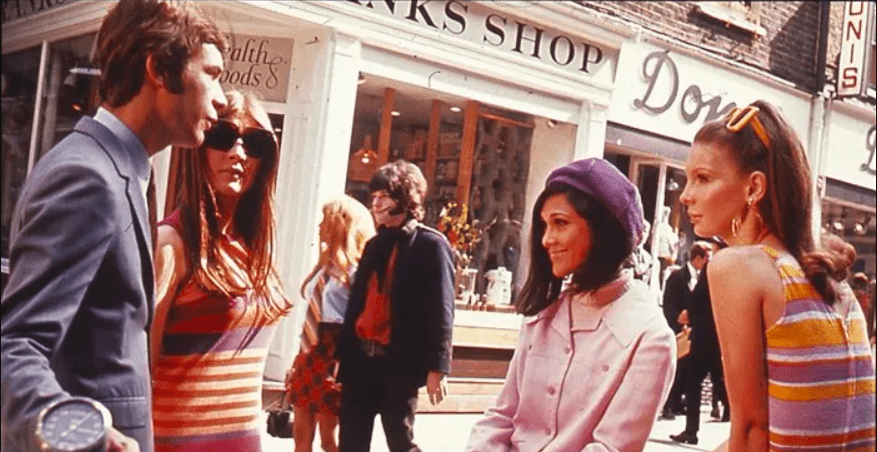
A few days ago, I attended the birthday party of one of my sisters-in-law, who had turned 60 (being born on August 11, 1965). My nephews, niece, and their spouses decided to make the party a sixties-themed party.
I informed them that, contrary to popular belief, the 1960s was a conservative decade despite the emerging liberalism. Hence the birthday party would not be reminiscent of Woodstock. In addition, I recommended that all male attendees wear Hawaiian t-shirts (just like the Beach Boys did) and female attendees dress up as Jackie Kennedy or Audrey Hepburn (whose outfits became major influences in women’s fashion at the time).
Thus, the decade was not all “sex, drugs, and rock ‘n’ roll”. Nor did everyone decide to tune in, turn on, and drop out. Those who referred to themselves as the counterculture were actually few in number, although they did gain a toehold in important American institutions, which they then took over during the following decades.
In addition to being a minority (although a significant one) the radicals of the sixties were conservative when it came to fashion. For instance, leftist male college students wore the same outfits to their protests and to dinner every night- ties and slacks (mostly from Brooks brothers).
Meanwhile, the girlfriends of such leftists (who shared their political views) had chosen to save themselves for marriage as opposed to engaging in pre-marital sex, which was actually an exception rather than the rule during the 1960s. The same was true for divorce rate and illegitimacy rates.
As previously mentioned, the sixties was not all about sex, drugs, and rock ‘n’ roll, especially since rock ‘n’ roll was not very popular during that decade. In fact, the following musicians who topped the charts back then consisted of the following: Bobby Vinton, Staff Sergeant Barry Sadler, Herb Alpert and the Tijuana Brass, Frank Sinatra, Johnny Mathis, Pat Boone, Steve Lawrence, Louis Armstrong, Lawrence Welk, Dean Martin, Petula Clark, Paul Anka, Conway Twitty, Roger Miller, Andy Williams, Henry Macini, the Singing Nun, Lorne Greene, and Nat King Cole.
Also, as previously mentioned, men wore suits and ties. As for young women at the time, they wore short dresses with long stockings or woolen skirts and wool sweaters. Hardly any women chose to wear pants. It should be noted that many dining establishments required male customers to wear a coat and tie.
Many people tend to visualize sixties fashion with the hippie look- tie-dyed patterns, loud floral prints, bell-bottomed pants, long, flowing dresses, low-cut halter tops, long hair, sunglasses, and wearing flowers in one’s hair. As it turns out, the hippie look was confined to a minority within the American population, and even a minority within the counterculture. In addition, the hippie look died a quick death.
In conclusion, the counterculture represented a small portion of the American population during the conservative 1960s.
